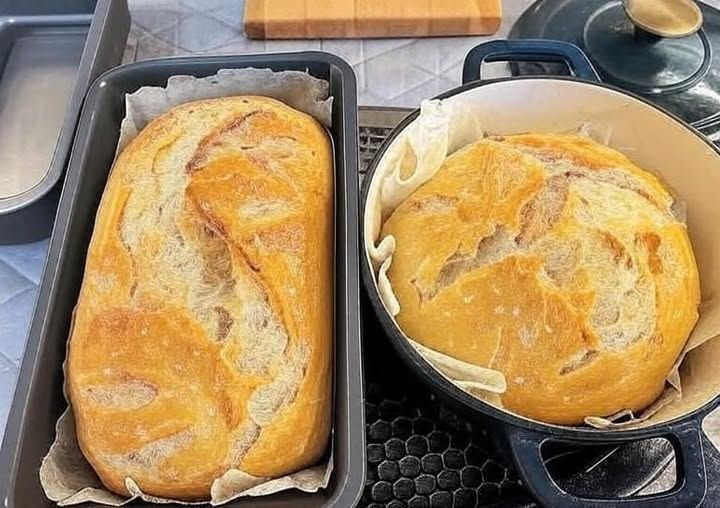
Total Time: ~24 hours (mostly hands-off fermentation)
Active Prep Time: 30 minutes
Baking Time: 50 minutes
Difficulty: Intermediate (requires an active sourdough starter)
Yield: 1 beautiful round loaf (boule)
The Heart of the Recipe: Understanding the Process
This recipe is a journey, not a race. The extended fermentation time is where the magic happens—developing complex flavor, a chewy texture, and that signature sourdough tang. The process is broken into phases: Levain Build, Autolyse, Bulk Fermentation, Shaping, Cold Proof, and Baking. Each step builds the structure and character of your final loaf.
Intensity Breakdown:
-
Hands-On Effort: Low (short, focused periods of mixing and shaping).
-
Technical Skill: Medium (requires feel for dough handling and timing).
-
Patience Required: Very High (the dough and the baker both need time to rest).
Ingredients
For the Levain (overnight starter build):
-
40g active, bubbly sourdough starter (100% hydration)
-
80g bread flour
-
80g lukewarm water (75-80°F / 24-27°C)
For the Main Dough:
-
All of the levain (about 200g)
-
375g lukewarm water (75-80°F / 24-27°C)
-
500g bread flour (high-protein, such as King Arthur)
-
10g fine sea salt
-
Rice flour, for dusting (optional, prevents sticking)
Equipment:
-
Digital kitchen scale
-
Medium mixing bowl
-
Bench scraper
-
Banneton or proofing basket (or a bowl lined with a clean, floured tea towel)
-
Dutch oven with lid
-
Razor blade or lame for scoring
Instructions
Phase 1: Build the Levain (Night Before, ~9:00 PM)
-
In a small jar or bowl, combine the 40g active starter, 80g water, and 80g flour.
-
Mix thoroughly until no dry flour remains. Cover loosely and let sit at room temperature (70-75°F / 21-24°C) for 10-12 hours, overnight. It’s ready when it’s at least doubled in size, domed on top, and bubbly throughout.
Phase 2: Mix & Autolyse (Next Morning, ~8:00 AM)
-
In a large mixing bowl, combine the 375g water and all of the ripe levain. Use a whisk or your hands to dissolve the levain completely.
-
Add the 500g bread flour. Mix with a sturdy spatula or your hand until no dry bits remain. The dough will be shaggy and sticky.
-
Cover the bowl and let it rest for 45-60 minutes. This autolyse (resting period) allows the flour to fully hydrate and gluten to begin developing naturally, making the dough easier to handle.
Phase 3: Incorporate Salt & Bulk Fermentation (~9:00 AM – 2:00 PM)
-
Sprinkle the 10g salt over the dough. Wet your hand, and pinch and fold the dough to incorporate the salt. It will feel tight at first but will relax.
-
Perform Stretch and Folds: Over the next 2.5 to 3 hours, you will perform 3-4 sets of “stretch and folds.” Every 30 minutes, wet your hand, reach under one side of the dough, stretch it up, and fold it over the center. Give the bowl a quarter turn and repeat 3-4 more times until you’ve gone around the bowl. This builds incredible strength without kneading.
-
After the final fold, cover the bowl and let the dough finish its bulk fermentation. The dough should look smooth, billowy, have increased in volume by about 30-50%, and be dotted with small bubbles. Total bulk time is highly temperature-dependent (4-6 hours). The dough should feel alive and jiggly, not dense.
Phase 4: Shape & Cold Proof (~2:00 PM)
-
Lightly flour your work surface. Gently turn the dough out. Using your bench scraper, fold the sides into the center to create a tight surface tension, then flip it over seam-side down.
-
Let it rest, covered, for 20 minutes (the “bench rest”).
-
Lightly flour the top of the dough and your banneton. With floured hands, flip the dough over so the smooth side is now down. Fold the edges into the center again, then roll the dough towards you, creating a tight skin. Pinch the seam closed.
-
Place the dough seam-side up into the floured banneton. Sprinkle the top (now the bottom) with a little more flour.
-
Cover with a plastic bag and place immediately into the refrigerator for a 12-16 hour cold proof. This slow fermentation deepens flavor and makes the dough easier to score.
Phase 5: Bake (Next Morning, ~8:00 AM)
-
Place your Dutch oven with its lid into your oven. Preheat to 500°F (260°C) for at least 45 minutes.
-
Take the banneton from the fridge. Place a piece of parchment paper over the top and invert the dough onto it. It should hold its shape.
-
Using a razor blade, score the top with one confident, shallow cut about ¼-inch deep. This controls expansion and creates the “ear.”
-
Carefully remove the hot Dutch oven. Lower the dough (with parchment) into the pot. Cover with the lid.
-
Bake at 500°F (260°C) with lid on for 20 minutes. This traps steam for a blistery, crispy crust.
-
Reduce heat to 450°F (230°C), remove the lid, and bake for another 25-30 minutes until the crust is deeply, gloriously browned.
-
Transfer the loaf to a wire cooling rack. LET IT COOL COMPLETELY before slicing (at least 3-4 hours). This is non-negotiable—it allows the interior crumb to set.
Baker’s Notes & Troubleshooting
-
Starter Readiness is Key: Your starter should reliably double within 4-8 hours of feeding. If it’s sluggish, your bread will be too.
-
Temperature is Your Guide: In a warmer kitchen, fermentation speeds up. In a cooler one, it slows down. Watch the dough, not the clock.
-
The Cold Proof is Flexible: Need to delay baking? The dough can often stay in the fridge for up to 24-36 hours, developing even more tang.
-
No Dutch Oven? Use a baking stone or steel with a pan of boiling water beneath it to create steam for the first 20 minutes.
Nutrition Information
Per serving (based on 20 slices per loaf). Values are estimates.
-
Calories: ~110 kcal
-
Total Fat: 0.5g
-
Sodium: 195mg
-
Total Carbohydrates: 22g
-
Dietary Fiber: 1g
-
Sugars: 0g
-
Protein: 4g